
Zucker ist Glukose und Fruchtzucker ist Fruktose. Wir brauchen für Zuckerstoffwechsel Insulin, aber Fruktose wird in der Leber verstoffwechselt.
Viele denken, dass nur Fructose wird in den Früchten vorhanden. In Obst sind Fruktose, Glucose und Saccharose vorhanden. Saccharose ist ein Molekül von Glukose und Fruktose in gleichen Anteilen. Die Früchte haben also etwa gleiche Menge an Glukose und Fruktose. Tafel Zucker ist in der Regel Saccharose.
Fruktose-Sirup, die in vielen alkoholfreien Getränken vorhanden ist, wird in der Regel eine Mischung aus etwa gleichen Teilen Glucose und Fruktose.
Fruktose ist genau wie Alkohol in den Leber verstoffwechselt. Fruktose Stoffwechsel ist bevorzugt und ist nicht optimal für die Gesundheit der Leber.
Beide überschüssige Glukose und Fruktose sind in Triglyceriden in der Leber umgewandelt. Wir müssen vorsichtig mit Zucker als auch mit Fructose umgehen.
Beeren, Melonen, Baum Früchte sind reich an Fruchtzucker. Honig und einige Wurzel-Gemüse enthalten auch erhebliche Menge an Fruktose.
Friday, March 12, 2010

Tuesday, March 2, 2010

To explain diabetes very simply we can say that it means excess of sugar in blood. There are three reasons for that: pancreas secretes less insulin or no insulin and the secreted insulin is ineffective to do its metabolic function, which is to send the glucose inside the cells for the production of energy.
Insufficient insulin secretion causes increase of blood sugar, thirst and excessive urination, fatigue and cardiovascular and kidney damage.
There are two types of diabetes. In type-1 there is no secretion of insulin and the patients must take insulin injection. In type-2 insulin is there but this is resistant and not able to do its function.
Age, weight and physical activity also play a role in type-2 but we should not also forget the hereditary factor.
Whatever you eat, there is an effect on your blood sugar because carbohydrate is inevitable in our food. We must select the food correctly so that we can have a control on the blood sugar.
There are many effects of food on diabetes. Food can also act in a helpful manner by supporting insulin or decreasing the sugar by itself.
Antioxidants from food can bring the free radicals under control so that the beta cells in pancreas are not damaged. Carbohydrates and excessive sweets increase the blood sugar value very sharply.
The allergic reaction to food constituents in type 1 are much delayed, e.g. protein in milk.
People regularly eating fish have only 50% of the risk to get diabetes than the people who do not eat fish normally. The food which contains a lot of saturated fat gives problems. Overweight and obesity are risk factors for diabetes type-2.
Broccoli is rich in chromium and chromium supports the insulin and the sugar value is reduced. Nuts, barley, mushrooms, whole grains, yeast, tea and broccoli are the foods rich in chromium.
Fenugreek is well known for its action against sugar and cholesterol, both are lowered. But you must be careful if you have only high blood pressure or diabetes.
Cinnamon also has the effect to lower blood sugar.
Legumes which have complex carbohydrates and high fibre also lower cholesterol as well as sugar.
The diluted juice of bitter gourd helps to reduce the blood sugar but the exact mechanism behind this action is not clearly known.
It is better to take food high in antioxidants such as vitamin C, E and beta-carotene. Sugar metabolism produces harmful free radicals and these must be scavenged from our body, otherwise they can oxidize LDL.
To prevent type-1 diabetes, avoid dairy products to the babies at least till they become one year old.
To prevent type-2 diabetes, you must reduce weight and do more physical work. Eat fish, nuts, legumes, whole grain food and food containing antioxidants.
If you have diabetes, contact your doctor or dietician for a course which will inform you clearly the connection between diabetes and food. Whole grain food, boiled rice, potato, legumes including soy beans, noodles, fish and lean meat are the better food.
Whenever I talk to persons about fruits, the topic touches always fructose (commonly known as fruit sugar in India) and they do not know what it is exactly. Fructose is not alone present in the fruits. Glucose, fructose and sucrose are present in fruits in different amounts and that makes it difficult to say how much sugar is present in a fruit. To take banana as example, here approximately 50% sugar and 50% fructose is present in it. Fructose is metabolized through liver and has nothing to do with insulin and sugar metabolism.
It is also important to know that too much of fructose is harmful to the liver and thus to your health. Sucrose has sugar and fructose in equal amounts.
What is the correct diabetic food? About 40 to 60% of total calories come from carbohydrates
Less than 20% from mono and polyunsaturated fats
Less than 10% from saturated fat, for example animal fat and plant fat
It is not easy to take the necessary amount of food that contains the required quantity of fibre daily. But this is the optimum.
It sounds so easy and you may ask where the problem is? Each diabetes patient is different. He has different weight, his job is different, his physical activity is different and his stress is different.
One is lucky because his wife manages the whole diet very good. The other is a single woman or man. We cannot make a general diet plan. The plan must be individual and tailor made. This makes the whole thing difficult.
The second important problem in the management of diabetes is the fat metabolism. Excess sugar is converted in the liver to fat, the triglyceride and excess fructose is also converted into triglyceride. Apart from this excess protein is converted in the liver to sugar. In turn this sugar is also converted to triglyceride. Now, you know why the diet plan must be tailor made.
With an individual diet plan and a good explanation to the patient diabetes is very good manageable for decades.
Friday, February 19, 2010

Sugar is glucose and fruit sugar is fructose. We need for sugar metabolism insulin, but fructose is metabolised in the liver.
Many think that only fructose is present in the fruits. In fruits there are fructose, glucose and sucrose. Sucrose has one molecule of glucose and fructose. The fruits thus have approximately equal amount of glucose and fructose. Table sugar is normally sucrose.
High-fructose corn syrup which is present in many soft drinks is usually a mixture of approximately equal amounts of glucose and fructose.
Fructose is metabolised exactly like alcohol and so in excess bad for the liver health.
Both excess glucose and fructose are converted into triglycerides in the liver. We must be careful with sugar as well as with fructose.
Berries, melons, tree fruits are rich in fructose. Honey and some root vegetable also contain significant amount of fructose.
Saturday, January 16, 2010

Fruit juices containing sorbitol and fructose can cause diarrhoea because they are not absorbed well in the small intestine as well as in the large intestine where they are attacked by bacteria; diarrhoea, gas and crampy abdominal pain are the results.
Apple juice is bad because it is high in sorbitol and fructose, followed by pear and green grape juice.
The safest fruit juice for infants and children is orange juice because it is low in fructose and has no sorbitol.
Wednesday, January 13, 2010

If I have to answer you in one sentence then I must say in excess it is not healthy. Fructose is present in honey, fruits and some of the root vegetables. I hear even from my FB friends that it contains only fructose and so surely it is better than sugar.
Is it correct? No, it is not at all correct. A simple comparison is that there are trillions of cells in our body which could metabolize sugar, but only liver can metabolize fructose. Liver has many other important functions than metabolizing fructose. In excess it is as bad as alcohol because fructose is metabolized immediately if it is present in the blood. This is an extra and excess work to the liver.
Most of the non-alcoholic soft drinks including cola drinks contain high-fructose corn syrup (HFCS). It is used because it is cheaper than sugar and here mostly the ratio of fructose:glucose is 55% to 45%. Now and then a glass is OK, but not too much.
What are the health problems we may get from fructose? There are many and they include:
• Excess is converted into blood fat, triglycerides which is a risk factor for cardiovascular diseases
• Excess may cause insulin-resistance, elevated LDL-cholesterol and obesity
• It is also one of the causes for non-alcoholic fatty liver disease
• It can react with protein and so fructose found in soft drinks may cause gout
If you have diabetes you can use less of it.
Sunday, November 29, 2009
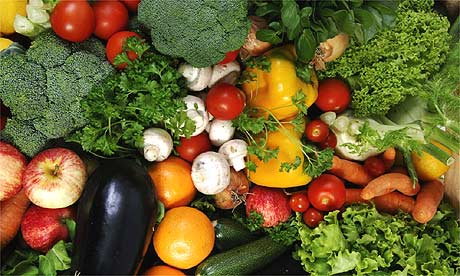
Genes may play a role here, but the scientific explanation is simple; if you consume huge amount of carbohydrates, after digestion the sugars are used to produce energy in our cells and the excess sugars are sent to the liver where they are converted into triglycerides.
There are two more significant points are also there. They are:
• The intake of fruit sugar, fructose
• Excess intake of protein
Fructose is metabolized in the liver and the excess of it is converted to triglycerides. If you consume more protein than your body requires the excess is converted into sugar which in turn will be converted to triglycerides.
You must be careful in the intake of carbohydrates including fructose and also many soft drinks which can also contain sugar or fructose.
With half the amount of carbohydrates intake from your food and enough physical activity you could bring down the triglycerides without any medicine. This is good for your health.
You might also like...
Subscribe


 Posts
All Comments
Posts
All Comments
Dr.K.Padmanaban Ph.D

Click the image to see my profile